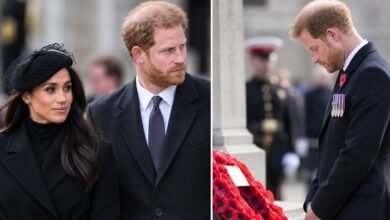
Prince Harry Gets Fresh Hope As Expert Revives ‘Half-In, Half-Out’ Royal Plan
Prince Harry has received fresh hope over his controversial “half-in, half-out” royal plan after royal expert suggested that the idea could eventually become a reality. The Duke of Sussex’s proposal was rejected by the late Queen Elizabeth II in 2020, but the latest comments have reignited debate over whether a more flexible royal model could emerge in the future.
Harry and Meghan Markle famously wanted to step back from their senior royal roles while retaining a connection to the monarchy. Their proposed arrangement would have allowed them to continue carrying out selected royal duties while also pursuing private opportunities and building an independent life overseas.
The plan ultimately became one of the major points of disagreement during the discussions surrounding the Sussexes’ departure from royal life. After the Sandringham Summit in 2020, the late Queen made it clear that the couple could not operate as working royals on a “half-in, half-out” basis.
That decision eventually paved the way for Harry and Meghan to leave their senior positions completely and relocate to the United States with their son, Prince Archie. They later welcomed their daughter, Princess Lilibet, and established their family life in California away from the traditional structure of the British monarchy.
However, royal author Simon Vigar believes Harry’s original idea may not be as unrealistic as it once appeared. Speaking to Fox News, the author of The Four Wives of Windsor suggested that some form of hybrid royal arrangement could eventually become necessary as the monarchy continues to evolve.
Vigar appeared sympathetic to the idea that Harry had identified a potential future direction for the institution. “I think in years to come, there will be a hybrid version. I think he’s right,” he said, suggesting that the concept could eventually be adapted to suit changing circumstances within royal families.
The author also explained why he believes such a model could become possible in the future. According to Vigar, there needs to be a way for members of royal families to support relatives and undertake meaningful work without constantly facing accusations that they are exploiting their royal connections for personal gain.
Harry had previously hoped for precisely such an arrangement when he and Meghan decided to step away from their traditional duties. The proposal was seen as an attempt to balance royal responsibilities with greater personal freedom, although it ultimately proved impossible under the rules established by the late Queen.
The debate has now been reignited by another royal commentator, Ian Pelham Turner, who argued that the Palace may have missed an opportunity by refusing to consider Harry and Meghan’s proposal. He described the “half-in, half-out” approach as a modern way for royal families to operate in an increasingly changing world.
Turner went further by suggesting that the late Queen may have received poor advice when the Sussexes’ proposal was rejected. He argued that Harry had been attempting to protect Meghan from what he described as sustained pressure and criticism, although the royal family’s concerns about divided loyalties remained significant.
The idea of a hybrid role also raises difficult questions about money, representation and accountability. Allowing royals to combine official duties with private commercial activities could create concerns over conflicts of interest, especially when their public status could potentially benefit their independent ventures.
For Harry, however, the possibility of a future hybrid model could represent a significant vindication of the position he took before leaving royal life. The Duke has repeatedly maintained that he wanted to serve his family and country while also gaining greater control over his personal life and security arrangements.
Despite the renewed discussion, a full return to working royal life for Harry and Meghan remains highly uncertain. Even if the monarchy eventually adopts a more flexible approach, it would not necessarily mean that the Sussexes themselves would be invited to resume official duties.
The latest comments nevertheless offer Harry an unexpected boost, particularly as his relationship with King Charles appears to be moving toward a more positive phase. While the “half-in, half-out” arrangement remains unlikely in its original form, the possibility of a future hybrid model shows that the debate surrounding Harry’s royal role may not be completely over.