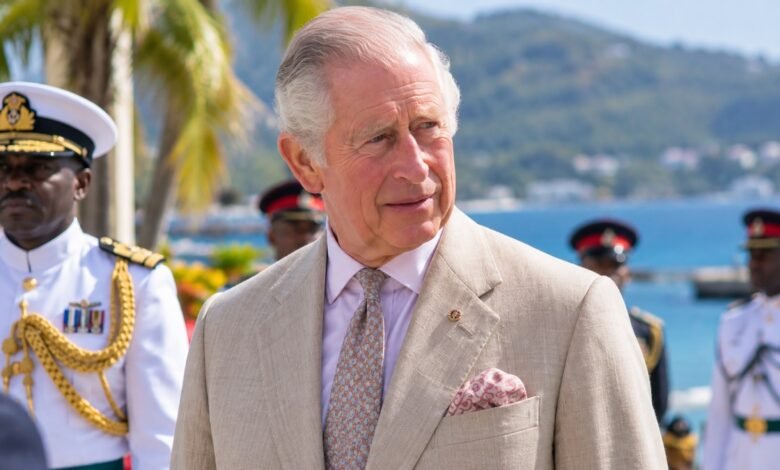
King Charles’s Caribbean tour is drawing attention to calls for an apology over Britain’s involvement in slavery, after The Times reported that the monarch will not deliver a formal apology during the visit. Buckingham Palace has confirmed the itinerary.
The tour will run from October 27 to November 4, 2026, taking Charles to The Bahamas, Guyana, and Antigua and Barbuda. Queen Camilla will join him in Antigua and Barbuda, where they will attend the Commonwealth Heads of Government Meeting.
The Palace announcement, on October 2, outlines a programme centred on communities, young people and the environment. It does not announce a slavery apology or set out the wording of any speeches the King will deliver during the trip.
That distinction matters because the position on an apology comes from newspaper reporting rather than an explicit statement in the published itinerary. The Times says Charles will face renewed demands for reparations, including from Guyana’s president, during the visit.
The debate also extends beyond the royal family. Caribbean governments have pursued reparatory justice through CARICOM, the regional community, presenting it as a question of addressing the enduring consequences of slavery and colonialism through action as well as acknowledgement.
CARICOM’s demands include a formal apology, alongside measures involving education, public health, cultural institutions and debt. For campaigners, the discussion is broader than whether a royal speech includes particular words: it concerns what governments and institutions do afterwards.
The regional campaign has continued to develop this year. CARICOM announced that its leaders had endorsed a revised reparations manifesto, while earlier discussions identified the Commonwealth meeting in Antigua and Barbuda as an opportunity to advance the reparatory justice agenda.
That gives the forthcoming summit significance beyond its ceremonial programme. With Commonwealth leaders gathering in the same place, the occasion provides a setting for conversations about historical responsibility alongside priorities. It does not, however, establish that any agreement will follow.
In The Bahamas, Charles’s schedule includes a youth rally in Nassau, a visit to the Royal Bahamas Defence Force and conservation engagements. These events place local communities and environmental concerns at the centre of the first part of his programme.
In Guyana, the King is expected to visit Georgetown and take part in biodiversity engagements. His schedule also includes meeting the National Toshaos Council, recognising Indigenous communities, as well as activities involving business, heritage and the country’s natural environment.
Antigua and Barbuda will host joint appearances by Charles and Camilla, including an Independence Day parade and a church service. The Queen also has separate university and school engagements, while the couple will participate in the Commonwealth summit’s opening ceremony.
The wider international reparations movement has also gained attention. In June, Reuters reported that African and Caribbean representatives backed a plan at a conference in Ghana, illustrating how demands for acknowledgement and repair extend well beyond this royal visit.
For readers following the tour, the key distinction is between the confirmed engagements and expectations about the King’s remarks. The itinerary establishes where he will travel; the newspaper report describes an anticipated position on an issue that remains politically sensitive.
As the October departure approaches, attention will turn to the speeches and discussions themselves. Those will provide a clearer account of how the monarchy and participating governments address the relationship between historical injustice, present responsibilities and future cooperation.