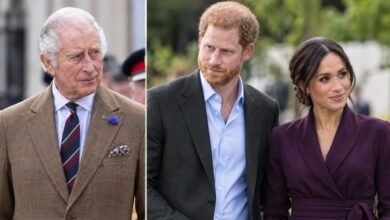
Prince Harry And Meghan Markle Face Fresh Security Debate Following Reports of UK Return

The debate over security arrangements for Prince Harry and Meghan Markle has taken another turn following reports that the Sussexes are preparing to spend an extended period in the UK with their children.
Harry has been fighting for years over his right to receive taxpayer-funded police protection while in Britain. The issue has become even more significant following reports that his family could now spend much more time in the country.
The Royal and VIP Executive Committee, known as Ravec, had previously considered security arrangements surrounding Harry’s occasional UK visits. However, the reported decision to return for a longer period has created a new set of considerations.
Reports have also claimed that Harry privately sought updates from Home Secretary Shabana Mahmood regarding the security assessment. The discussions have added further attention to the question of how the family should be protected.
Now former Home Secretary David Blunkett has suggested that a compromise could provide a practical solution. Rather than giving the Sussexes the most extensive level of protection, he outlined a possible middle-ground arrangement.
Blunkett explained to The Times that there are different levels of security available depending on the circumstances and assessed risk. The highest level could involve multiple close-protection officers and a backup vehicle operating around the clock.
He described another option in which one or two officers would travel with the principal, providing a reduced level of protection compared with a full close-protection operation.
A third possibility would involve providing the family with a driver who has security training. Blunkett suggested that an arrangement somewhere between the different levels could be reasonable for the time being.
The former Home Secretary reportedly believes such an approach could be introduced temporarily and then reassessed after a couple of years. That could allow authorities to adjust protection as the family’s circumstances and assessed risks change.
The discussion comes as reports have suggested that security for Harry, Meghan and their two children could cost taxpayers as much as £5 million annually if the most extensive arrangements were provided.
The potential cost has become an important part of the debate, particularly because Harry and Meghan are no longer working members of the Royal Family and do not routinely receive taxpayer-funded police protection.
Meanwhile, Prime Minister Andy Burnham has reportedly described the Sussexes’ security arrangements as a private matter. A Home Office spokesperson has also maintained that the government does not discuss individual security arrangements.
Dame Emily, chair of the Commons Foreign Affairs Committee, has nevertheless argued that Harry’s position should be taken seriously. She pointed to his status as the King’s son and his public service as reasons why his family could face security risks.
She also said she would want reassurance that Harry, Meghan and their children would be safe, arguing that they deserve appropriate security.
The debate therefore appears to be moving toward finding a balance between protection and cost. Blunkett’s proposed middle ground could offer authorities a way to address security concerns without immediately committing to the most expensive arrangement.
With the Sussexes reportedly preparing for a longer stay in Britain, the question of their protection is unlikely to disappear soon. Any final decision will ultimately depend on official risk assessments and the security circumstances surrounding the family.