King Charles and Prince William Under Fire As US Lawmakers Demand Andrew Mountbatten Windsor Testimony
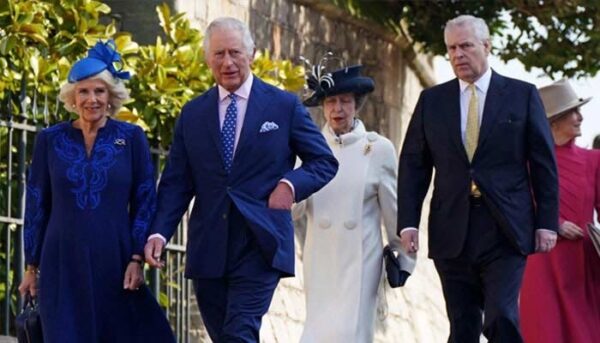
King Charles and Prince William are facing renewed pressure as the fallout surrounding Andrew Mountbatten Windsor deepens. The controversy has now crossed the Atlantic, placing the British royal family under intense international scrutiny.
Reports suggest senior royals recently held private discussions to address the escalating crisis. As investigations connected to the Epstein saga gather momentum, the Palace is said to be focused on protecting the institution’s long term stability.
Royal commentator Hilary Fordwich claimed that both King Charles and the Prince of Wales have been clear about cooperating fully with UK authorities. According to her, the monarchy understands the seriousness of the situation.
However, tension appears to be growing behind closed doors. Prince William is reportedly frustrated by his uncle’s refusal to engage with US investigators seeking answers.
Fordwich stated that the future king remains determined to prioritize the preservation of the monarchy. She added that William is adamant about isolating Andrew Mountbatten Windsor and refusing to shield him from consequences.
The Prince of Wales is said to be focused on victims rather than family loyalty. His stance reportedly reflects a broader effort to modernize the image of the Crown under King Charles.
US officials have expressed interest in obtaining a formal transcribed interview with Andrew Mountbatten Windsor. While British citizens cannot easily be compelled to testify abroad, legal mechanisms such as a subpoena remain possible.
Fordwich noted that although Andrew now resides outside the United States, pressure from lawmakers and victims’ families could intensify. The possibility of a formal legal demand continues to hang over the situation.
It has also been reported that Garcia has formally requested testimony from Andrew Mountbatten Windsor in 2025. This development adds another layer of complexity for King Charles and Prince William as they navigate diplomatic sensitivities.
Royal analyst Ian Pelham Turner offered a different perspective on Andrew’s silence. He suggested that the embattled royal may be deliberately withholding comment to maintain leverage.
Turner warned that if Andrew Mountbatten Windsor felt cornered or financially strained, he could theoretically pursue a tell all book. Such a move, he implied, would alarm the royal family given the potential revelations.
Meanwhile, commentator Richard Fitzwilliams argued that Andrew’s earlier promises to assist US lawmakers have not translated into action. He pointed out that despite political encouragement, Andrew cannot easily be forced to comply.
For King Charles, the timing is deeply unfortunate. As he works to reinforce public trust in the British royal family, the renewed spotlight on Andrew threatens to overshadow reform efforts.
Prince William’s reported exasperation highlights generational differences in handling crises. The heir to the throne appears intent on drawing a firm line to safeguard the monarchy’s future.
With legal and political pressure mounting from both sides of the Atlantic, the coming months could prove pivotal. The decisions made now by King Charles and Prince William may define how the Crown weathers one of its most persistent modern scandals.